



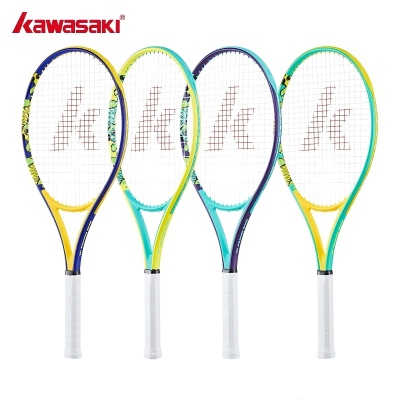
En el mercado mundial de equipamiento deportivo, La diferencia entre una raqueta de tenis promedio y una de alta calidad no es cosmética, sino estructural., basado en materiales, y impulsado por el rendimiento. Para distribuidores, clubs, and brands, understanding these differences is essential before sourcing from any tennis racket supplier.
A professional tennis racquet is engineered to deliver predictable performance, long-term durability, and consistent playing response under different match conditions.
1. Material Structure: The Core Performance Factor
High-quality rackets rely on advanced composite engineering rather than basic metal or low-grade alloys.
Most premium tennis rackets use:
- Carbon fiber composite frames
- Graphite reinforcement layers
- Multi-layer vibration control structures
This results in:
- Higher stiffness-to-weight ratio
- Faster swing response
- Better energy transfer on impact
In contrast, low-quality rackets lose stability during high-speed rallies.

2. Frame Engineering: Stability Under Pressure
The frame design determines how a tennis racquet behaves during impact.
A professional-grade structure ensures:
- Minimal frame deformation
- Controlled flex during ball contact
- Balanced power distribution
Como resultado, players achieve more consistent shot accuracy, especially during fast exchanges.

3. Balance & Weight Distribution
A high-quality tennis racket is not only about weight—it is about how the weight is distributed.
There are three key configurations:
- Head-light balance → better control and speed
- Head-heavy balance → more power
- Even balance → all-round performance
Professional rackets are engineered with precise calibration to match different playing styles.
4. String System & Response Control
The string bed is a critical performance interface of any professional tennis racket.
High-quality systems provide:
- Stable tension retention
- Improved spin generation
- Predictable ball rebound
Por lo tanto, players can maintain shot consistency across different match situations.
5. Shock Absorption Technology
Modern rackets integrate vibration reduction systems to improve player comfort and reduce injury risk.
A high-quality tennis racquet helps to:
- Reduce arm fatigue
- Minimize vibration shock
- Improve long-term play endurance
This is especially important for competitive and training environments.

6. Why Supplier Quality Defines Product Performance
The performance of a tennis racket is ultimately determined by the capability of the tennis racket supplier.
A reliable supplier like Enyong ensures:
- Strict production consistency
- Controlled material sourcing
- OEM/ODM customization capability
- Stable mass production for global distribution
This directly impacts brand reputation and long-term market success.
A high-quality tennis racket is defined by engineering precision, material integrity, and manufacturing consistency—not appearance. A true professional tennis racquet delivers stable performance, better control, and long-term durability under real playing conditions. For global buyers and distributors, partnering with a reliable tennis racket supplier such as Enyong ensures consistent product quality and scalable supply capability.







Añadir comentario