



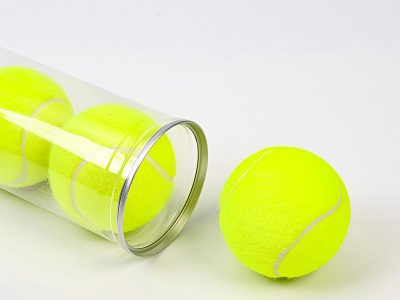
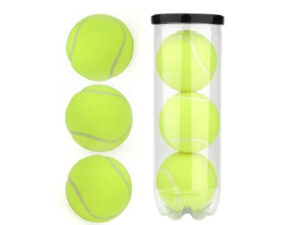
Quando um clube de tênis encomenda algumas dezenas de bolas de treino, pequenas diferenças entre bolas individuais podem não parecer particularmente importantes. The situation is very different when a sports brand, distribuidor, or training academy orders thousands of balls for regular use.
A tennis training ball needs to behave consistently from one ball to the next. Players get used to a certain level of bounce and response, while coaches rely on predictable ball behavior during repetitive drills. If some balls bounce higher, feel noticeably heavier, or lose their response faster than others, the training experience can quickly become inconsistent.
This is one of the reasons weight and bounce control are important in OEM tennis training ball production. For a manufacturer supplying products under another company’s brand, consistency is not just a production target. It is part of the quality that the brand promises to its customers.
Weight Is More Than Just a Number
The weight of a tennis ball affects how it feels when it is picked up, fed, hit, and received. A small variation may not be obvious when handling a single ball, but differences become easier to notice when dozens of balls are used during the same training session.
Coaches often use large quantities of balls for serving practice, baseline drills, multi-ball training, and beginner exercises. When the balls have similar weight and construction, players can focus on their technique instead of adjusting to a different ball after every shot.
Weight consistency is also important for OEM production because the agreed product specification needs to remain stable over time. A brand may approve a sample, place its first bulk order, and then reorder the same product several months later. If the manufacturing process changes significantly between batches, the customer may receive a product that no longer feels the same as the original.
For an OEM manufacturer, controlling weight is therefore part of maintaining product consistency across the entire supply cycle.

Bounce Consistency Directly Affects Training
Bounce is probably the characteristic players notice most quickly. A tennis ball does not simply bounce because it contains air. Its behavior comes from the interaction between the rubber core, internal pressure, ball construction, felt covering, peso, and the court surface. When these factors are well controlled, the balls in a training basket should produce a reasonably predictable response. When there is too much variation, players may have to adjust their timing and positioning from one ball to another.
This can be particularly frustrating during drills that depend on repetition. A coach may expect every fed ball to reach a similar height and travel through a similar trajectory. If one ball reacts differently, the player is no longer practicing under consistent conditions. For training products, the goal is not necessarily to make every ball behave identically under every possible condition. The important point is to keep production within a controlled and agreed performance range.
What Determines the Weight and Bounce of a Tennis Training Ball?
There is no single component responsible for the final performance of a tennis ball. Several parts of the product work together, and variation in any one of them can affect the finished ball.
Rubber Core
The rubber core has a major influence on the ball’s weight, elasticity, and response. The composition of the rubber, the molding process, core thickness, and curing conditions can all affect the final characteristics of the ball. If these parameters are not properly controlled, differences can appear between production batches. For an OEM project, manufacturers need to maintain consistent material and processing conditions rather than simply checking the finished product at the end.
Internal Pressure
For pressurized tennis balls, internal pressure is closely related to bounce performance. A change in pressure can alter how quickly the ball responds after impact. If pressure varies significantly between products, players may notice differences in bounce and feel. Pressure control is particularly important for brands that have already established a specific product performance in their market. Once customers become familiar with that performance, maintaining the same characteristics in future orders becomes part of maintaining the brand’s product identity.
Felt Cover
The felt covering is another important part of the ball.
Felt affects the surface feel, friction, durabilidade, and interaction between the ball and racket. Differences in felt material, density, thickness, or application can change how a ball behaves during play.
The felt also needs to be applied consistently so that the finished products have a uniform appearance. This is especially relevant for OEM products where the buyer may have specific requirements for color and overall appearance.
Processo de Fabricação
Even when the same materials are used, manufacturing conditions can influence the final result. Molding, curing, assembly, controle de pressão, felt application, and other production stages need to be managed within appropriate tolerances. The purpose is not to eliminate every microscopic difference but to prevent variations from becoming large enough to affect the product’s intended performance. This distinction is important in commercial manufacturing. Quality control is about controlling variation, not claiming that every individual product is physically identical.

Why Batch Consistency Matters to OEM Customers
For a sports brand, the first order is only part of the relationship with an OEM manufacturer. A customer may initially order a trial quantity, evaluate the product, and then move to larger orders once the product performs well in the market. At that point, consistency between batches becomes much more important. Consider a distributor that supplies tennis academies and clubs. If the first shipment performs well but the next shipment has noticeably different bounce characteristics, the distributor may face complaints even though both batches technically meet the basic product description.
The issue is not simply whether the balls are usable. It is whether customers receive the same product they expected when they placed the repeat order.
That is why experienced OEM buyers often pay attention to production consistency, quality tolerances, sample approval, and inspection procedures rather than comparing suppliers on unit price alone.
How Should Manufacturers Control Tennis Ball Quality?
A reliable quality-control process starts before the finished tennis ball reaches the inspection table. Material selection is the first step. Borracha, sentido, adhesives, and other components should remain within the specifications established for the product. During production, key processes need to be monitored. Core molding and curing, assembly, controle de pressão, and felt application can all influence the finished ball. Finished products can then be checked for characteristics such as weight, dimensions, aparência, and bounce performance. Depending on the customer’s requirements, manufacturers may use sampling inspections or other agreed testing procedures for bulk orders. The purpose of final inspection is not to replace process control. It is the last stage of a broader quality system designed to keep production within the agreed specification. Para clientes OEM, this approach provides something particularly valuable: greater confidence that the next shipment will perform similarly to the approved sample.
What Should Be Defined Before an OEM Order?
A clear product specification makes the manufacturing process much easier to manage.
Instead of describing a product simply as a “yellow tennis training ball,” an OEM buyer should define the characteristics that matter for its intended market and application.
Depending on the project, this may include:
- Ball size and weight
- Target bounce performance
- Core construction
- Felt material and color
- Surface characteristics
- Logo and printing requirements
- Packaging configuration
- Carton size and labeling
- Order quantity
- Quality tolerances
- Inspection requirements
The exact specification will depend on how the product is going to be used. A tennis academy buying training balls for daily coaching may have different priorities from a sports retailer developing a private-label product. Sample approval is also an important part of the process. A physical sample gives the buyer an opportunity to evaluate the product before committing to a larger production run.

Why OEM Tennis Training Balls Need More Than a Low Factory Price
Price is naturally important in bulk purchasing, but it does not tell the whole story. A lower unit price may look attractive at the quotation stage. If the product has inconsistent performance, short service life, or significant variation between batches, however, the actual cost to the buyer can be much higher. For distributors and sports brands, inconsistent products can lead to customer complaints, returns, additional inspections, and difficulties with repeat sales.
A dependable OEM supplier should be able to discuss the product in terms of materials, manufacturing tolerances, testing, packaging, and repeat-order consistency—not just the price per ball.
This is particularly important when the tennis training ball is sold under the buyer’s own brand. Once the product reaches the market, customers associate its quality with the brand printed on the packaging.
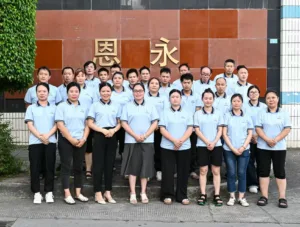
ENYONG’s Approach to OEM and ODM Sports Products
E SEU, our core expertise is in the design and development of high-quality sports products. We place strong emphasis on product development and practical performance, while also paying attention to more environmentally conscious approaches to product design. Our product range includes pickleball accessories, ferramentas de limpeza esportiva, tennis-related products, e outros equipamentos esportivos ao ar livre. For customers developing products under their own brands, we provide OEM and ODM services based on specific product and market requirements.
An OEM project may involve more than adding a logo to an existing product. Depending on the customer’s needs, specifications such as materials, product performance, aparência, packaging, and branding can all be considered during development.
For tennis training products, maintaining stable weight and bounce characteristics is an important part of creating a product that customers can use with confidence. Clear specifications and appropriate quality-control procedures also make it easier to maintain consistency when production moves from samples to larger orders.
Consistency Builds a Better Product
A tennis training ball is a relatively simple-looking sports product, but its playing characteristics depend on several factors working together. Peso, rubber construction, internal pressure, sentido, and manufacturing conditions can all influence how the ball behaves on the court. When these elements are properly controlled, players get a more predictable training experience and OEM customers have greater confidence in the consistency of their products. For brands and distributors, that consistency matters well beyond the first shipment. It helps create a product that can be reordered, distributed, and sold with fewer quality concerns.
For ENYONG, OEM and ODM development is about building sports products around the actual requirements of each customer. By combining product development with controlled manufacturing and quality management, we aim to provide sports products that are practical, consistent, and ready for long-term commercial use.



Adicionar comentário